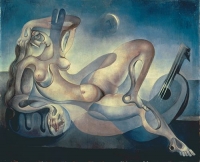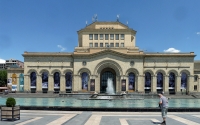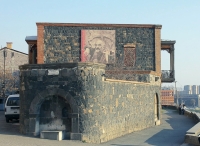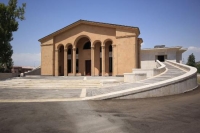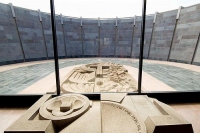
State Museum of Fine Arts in Artsakh was founded in 2010-2013 on the initiative and substantial logistical support of Professor Grigory Gabrielyants and consists only of gifts.
Read more >>
The Nikol Duman House Museum and Ethnographic District are located in the picturesque village of Tsaghkashat (Ghshlagh) along the main road between Stepanakert and Gandzasar.
Read more >>
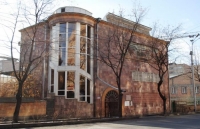
Right at the center of Dilijan and near the river Agstev, the summer house of Princess Mariam Tumanyan was located. Now it is the Dilijan Branch of Yerevan State Museum of Folk Art.
Read more >>
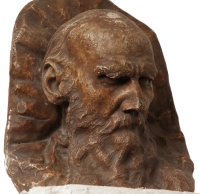
Sergey Dmitrievich Merkurov was a prominent Soviet sculptor-monumentalist of Greek-Armenian descent. He was a People's Artist of the USSR, an academic at the Soviet Academy of Arts, and director of the Pushkin Museum of Fine Arts from 1944 to 1949.
Read more >>
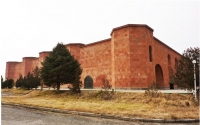
The Sardarapat Ethnography and Liberation Movement History Museum, in the Armavir Region, is located of the grounds of the historic Battle of Sardarapat, part of the memorial park.
Read more >>
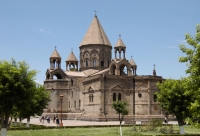
The Museum of the Mother Cathedral is situated in the southeast section of the Cathedral. Through the sponsorship of the Armenian Diocese of Russia, Catholicos of All Armenians, His Holiness Kevork IV, built the museum in 1869.
Read more >>
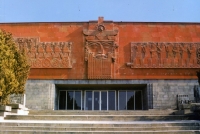
Ervand Kochar Museum is an important research and propaganda center of historic Avant-garde in the region. Artist and sculptor Ervand Kochar’s (1899-1979) heritage is one of the most interesting phenomena of the 20th century Modern Art.
Read more >>
State Museum of Armenian History The History Museum of Armenia is a museum with departments of Archaeology, Numismatics, Ethnography, Modern History and Restoration.
Read more >>
The Sergej Parajanov Museum is a tribute to one of the greatest figures of 20th-century world cinema. Comprising some 1,400 exhibits, the museum’s collection includes installations, collages, assemblages, drawings, dolls, and hats.
Read more >>
Officially, Komitas Museum-Institute is an art and biographical museum in Yerevan, Armenia, devoted to the renowned Armenian musicologist and composer Komitas. It is located adjacent to the pantheon at the Komitas Park of Shengavit district.
Read more >>
The Genocide Museum’s mission statement is rooted in the fact that understanding the Armenian Genocide is an important step in preventing similar future tragedies, in keeping with the notion that those who forget the past are condemned to repeat it.
Read more >>
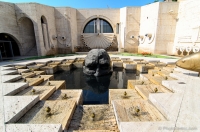
The Cafesjian Center for the Arts is dedicated to bringing the best of contemporary art to Armenia and presenting the best of Armenian culture to the world.
Read more >>
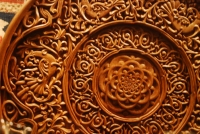
The Wood Carving Museum was founded in 1977 and contains 2,800 pieces acquired through donations from other collections and artists, expeditions, and purchases.
Read more >>
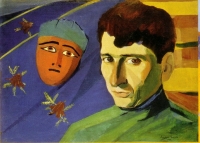
House-Museum of the great artist of the XX century-Martiros Sarian (1880-1972) was built in Yerevan by special order of Armenia government and open on Nov. 26, 1967.
Read more >>
The Charents Museum of Literature and Arts of Armenia is the largest repository of Armenian manuscripts and books encompassing the last three hundred years.
Read more >>
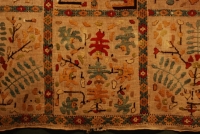
In the end of 1930s headed by the ethnographer and folk-collector Habetnak Babayan they founded Folk Art House, the collection of which became the foundation for creating the museum.
Read more >>
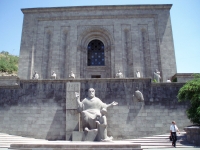
Manuscript, fragments of manuscript, documents, old printed books, precious bindings, individual miniatures, and more are shown from the Matenadaran’s database of roughly 23,000 manuscripts.
Read more >>
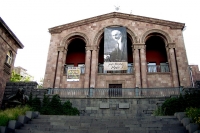
Hovhannes Tumanyan was an Armenian writer and public activist. He is considered to be the national poet of Armenia. Tumanyan wrote poems, quatrains, ballads, novels, fables and journalistic articles.Hovhannes Tumanian Museum functions since 1953.
Read more >>
Erebuni Fortress also known as Arin Berd is a fortified city from the ancient kingdom of Urartu, located in what is present-day Yerevan, Armenia. The name Yerevan itself is derived from Erebuni.It was built on top of a hill called Arin Berd overlooking the Arax.
Read more >>